Generator Inlets & Interlocks
A safe, code-compliant way to run your house on a portable generator when the grid goes down.
- 40 Years in Business
- 4.9 ★ · 131+ Google Reviews
- TECL #40498
- Licensed, Insured & Bonded
- 36 Electricians on Staff
Generator Inlets
When the Power Goes Out, an Extension Cord Isn't a Plan
Anyone who's been in North Texas through a hard winter storm or a spring outage knows the drill: the power's out, the generator's running in the driveway, and there are extension cords through the window powering a refrigerator and not much else.
A generator inlet and interlock fixes that. The inlet is a weatherproof connection point mounted outside your house. The interlock is a mechanical device at your panel that lets generator power feed your circuits — and physically prevents the generator and utility power from ever being connected at the same time. Plug in, flip the interlock, and you're running your fridge, lights, furnace fan, and internet off circuits in the wall, safely.
The unsafe version of this is worth naming: plugging a generator into a dryer outlet with a homemade double-ended cord. It works, which is why people do it — and it can kill the lineman working to restore your power, because it feeds electricity back into the grid. It's illegal, and it's the exact thing an interlock exists to prevent.
How It Works
Installed in a Day, Ready Before the Storm
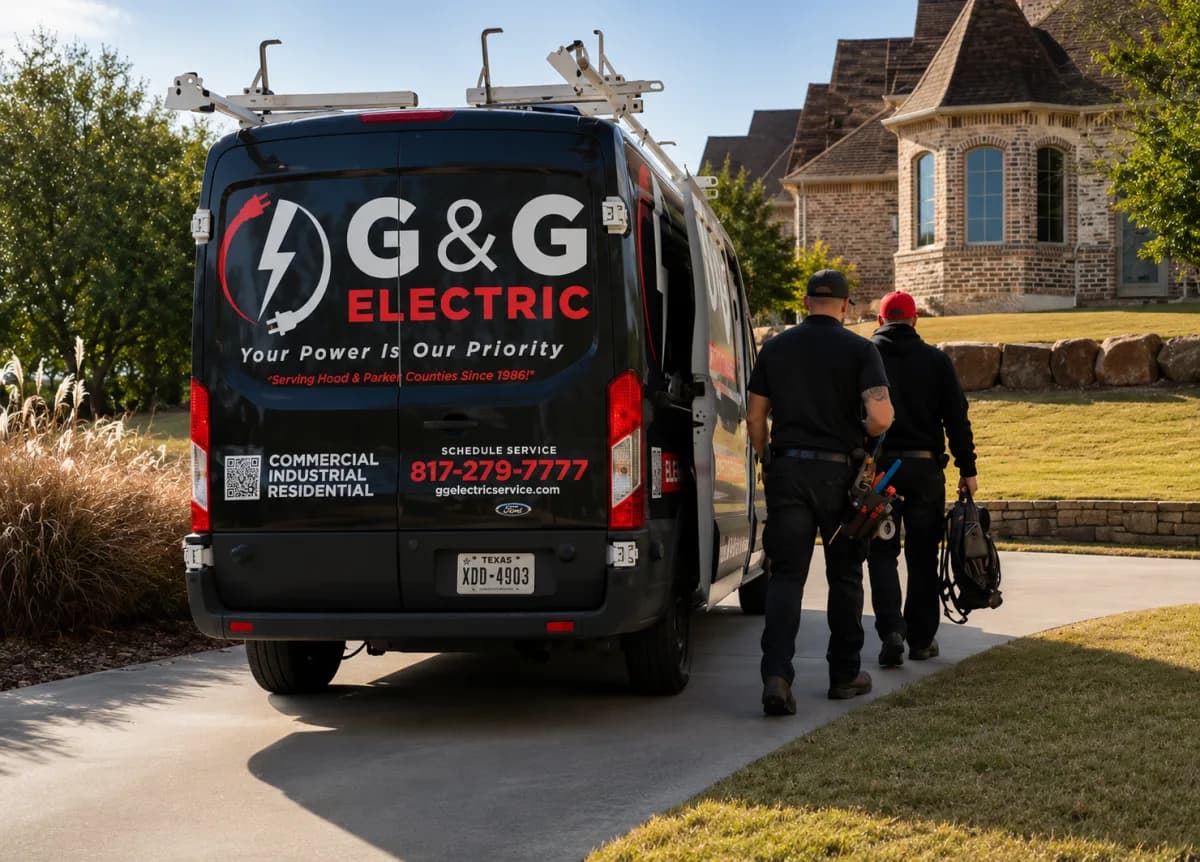
We mount the inlet where it makes sense for your generator, install the interlock kit (or a transfer switch where that's the better fit), and size the wiring to your generator's output — most portable units take a 30-amp or 50-amp inlet, and we'll match yours. The work is permitted, inspected, and warrantied for a year like everything we do.
Most installs are done in a single visit. The right time to do it is a calm week — not the day the forecast turns, when every generator in Texas sells out and every electrician's phone is ringing.
FAQ
Frequently asked questions
Need an electrician today?
Call and talk to someone in our Granbury office — not an answering service.
Call (817) 279-7777No — and this one matters. Backfeeding a house through an outlet with a double-ended cord sends power out to the utility lines, which can electrocute the line workers restoring your service. It's illegal and it's the specific danger an interlock exists to prevent. An inlet and interlock gives you the same result, safely.
An interlock is a mechanical plate at your existing panel that prevents utility and generator power from being on at once — simple, reliable, and the economical option for most homes. A transfer switch is a separate piece of equipment that switches selected circuits over; it costs more and suits some setups better. We'll recommend one after looking at your panel.
It's matched to your generator's output — most portables take a 30-amp inlet, larger units a 50-amp. Bring us the generator's model or wattage and we'll size the inlet, breaker, and cord correctly.
Our specialty is inlets and interlocks for portable generators — the most cost-effective backup power for most homes. If you're weighing a whole-home standby system, call us and we'll point you in the right direction.
Before you need it. After a storm knocks the grid out, generators sell out and every electrician's schedule fills. A calm week in fall or early spring is the right time.
Get it fixed right the first time.
Licensed electricians, a one-year labor warranty, and financing available through Acorn.